

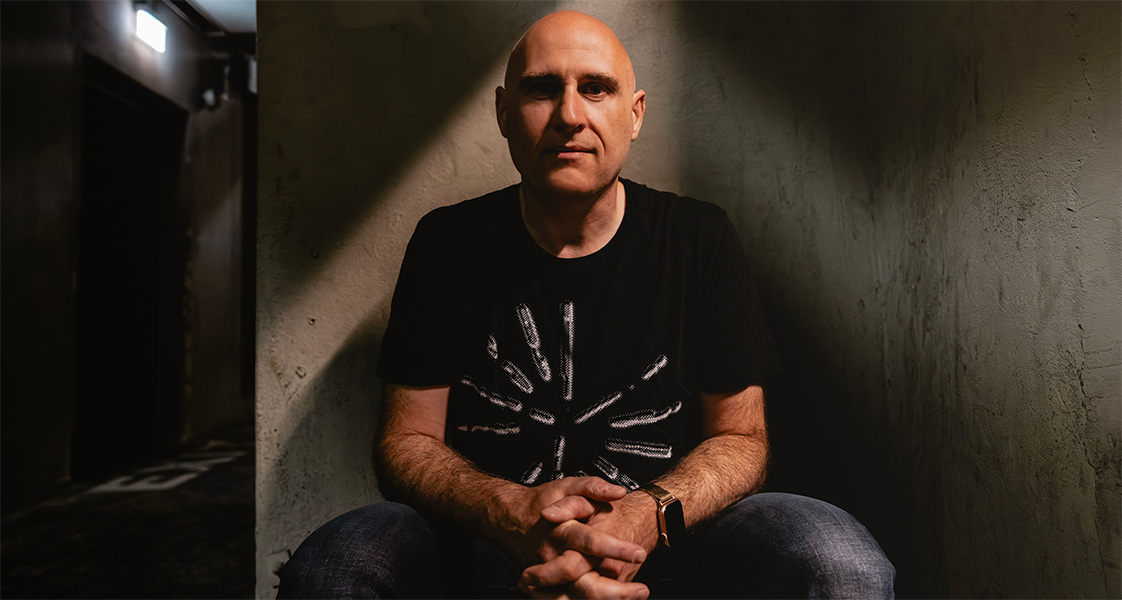
Beauty and the Beat has long stood as a beacon for deep musical curiosity, analogue devotion and community-driven dance culture. What began as a party built on warmth, openness and an exceptional sound system has grown into a label dedicated to preserving and presenting timeless music on vinyl. In this interview, the BATB crew reflect on their ethos, their approach to curation, and the story behind their first-ever double record release featuring the extraordinary sounds of Maranhão and Loopcinico.
WWD: What was the moment when you realized that the music you loved needed to exist on wax and that you would have to be the ones to make it happen?
Our friend Soundspecies had a track out called “Balafon Jam,” which at the time was only available digitally. We could really imagine it being played on the BATB dancefloor, and it coincided with our 10-year anniversary. It felt natural to start the label so we could have this on vinyl (we only played vinyl at the party, apart from rare occasions). They provided us with an unreleased version, and our friends Wolf Müller, Breakplus and The Room Below all made great remixes of the original track.
WWD: How did the desire to recreate the feeling of a great house party shape the identity of Beauty & the Beat as both a night and a label?
Our vision of a great house party is a safe place with good people around, fun, freedom to move, and a space where everyone feels accepted. In some ways it’s a complex ecosystem, and music is one key ingredient.
WWD: Why is an excellent analogue sound system so central to the BATB experience, and how does that commitment influence your approach to mastering and pressing records?
Our system is built so that music on vinyl can sound as warm, precise and suggestive as possible. We release music that we want to play at the party, so we pay attention to every step in the process: mixing, mastering, pressing — and also the artwork.
WWD: When you’re digging for original tracks to reissue or reinterpret, what qualities make you say: This belongs on BATB?
It’s a combination of physical perception, excitement and imagining how it will feel on the dancefloor. The music meets us.
WWD: You often invite friends and long-time BATB affiliates to remix the music. How do you choose who is right for each project?
It generally happens organically; it’s about figuring out who is in a good creative space at that moment. We’re grateful that our friends are always excited to create music for the BATB dancefloor.
WWD: Can you take us back to the moment you first encountered the music of Maranhão? What struck you most about the sound and the culture?
I first picked up an album of music from the festival Bumba Meu Boi at Patùa Discos (São Paulo), thanks to my friend DJ Paulão. We then travelled to São Luís, the capital of Maranhão, with my partner Julia. The first three things that struck me were the drums — they’re everywhere, and people make their own; the rhythms — there are rhythms for each deity and occasion, it’s all about the rhythms; and finally the richness of the music and its multiple influences (from Jamaica, local Indigenous traditions and Yoruba from Benin).
WWD: What drew you to Loopcinico’s work, and what made their 2013 CD feel like the perfect fit for BATB’s first double record release?
The music from Loopcinico sounds like nothing else. The messages, the instruments, the spiritual and shamanic feel. The release has one record with the full album plus one remix pressed at 33rpm, and one record with both sides at 45rpm for maximum impact on the dancefloor.
WWD: Maranhão’s rhythms draw from Jamaica, Yoruba traditions and Tambor de Mina. How did you approach presenting this syncretic heritage respectfully and authentically?
Tambor de Mina combines West African religions — such as Dahomean and Yoruba traditions — with Catholicism and Indigenous Amazonian shamanism. It’s similar to Candomblé, which is more widely known, but rooted in a different region of Brazil. Our release is not directly related to Tambor de Mina but definitely carries influences from Tupinambá Indigenous traditions. We stayed in close contact with Luiz Claudio, the percussionist and band leader, at every step of the process. The band seem genuinely happy that new light is being shed on their work. We’re really just facilitating the connection between the artists and the listeners/dancers.
WWD: Loopcinico blends live percussion with electronic programming. How did you ensure that this dynamic translated beautifully onto vinyl?
First, it was well recorded. Then Frank at The Carvery (London) did a fantastic job mastering the whole project. At each step we tested the sound quality and image on various systems — but the crucial and final test is always the BATB sound system.
WWD: What guidance, if any, did you give Vidock and Leonidas when inviting them to reinterpret the tracks?
No initial guidance. They both know the party well enough to feel what would work on the BATB dancefloor. During the process we exchanged quite a lot.
WWD: You’ve already tested some of the remixes on the BATB floor — and Hunee has too. What did you learn from those reactions?
Reactions were very positive straight away, which is obviously very exciting. We now know that 45rpm is the way to go for two of the remixes.
WWD: BATB is known for championing music that feels timeless rather than trend-driven. How do you recognise when a track has that quality?
We have a strong pool of records that have already stood the test of time. When we listen to new music, we compare it with that reference point. Do we get bored after several listens, or do we love it more?
WWD: Why is vinyl still the most meaningful format for BATB, especially when reissuing music that originally existed only digitally or on CD?
Our whole sound system is built to make vinyl sound great — the sound is more open and warmer. We’re not saying it’s the only way, but we had vinyl in mind at every step of building and upgrading the system. It’s an ongoing project; we never stop trying to improve it.
WWD: With your first double record now out, how do you see the label evolving? Are there other regions, archives or musical traditions you’re hoping to explore?
We’re keeping our ears open, as curious as we’ve always been. We look for the interstices between genres. There aren’t really specific plans for the label — if we get excited about music that belongs on vinyl, we set the wheels in motion.
WWD: Looking back at the parties, the community and now the label’s catalogue, what do you hope BATB will be remembered for?
We’d like people to remember that we created a community where anyone could enjoy a real audiophile experience without it becoming a luxury lifestyle product for rich people — a place where people of all ages and backgrounds could dance together in a completely non-commercial, non-competitive and non-threatening environment. We’re living through hard times. Getting people together to experience collective joy is becoming more and more of a political statement. We’re conscious of this.
WWD: We love that! Thanks for the chat 🙂
The ‘The London-Maranhão Connection’ is available here